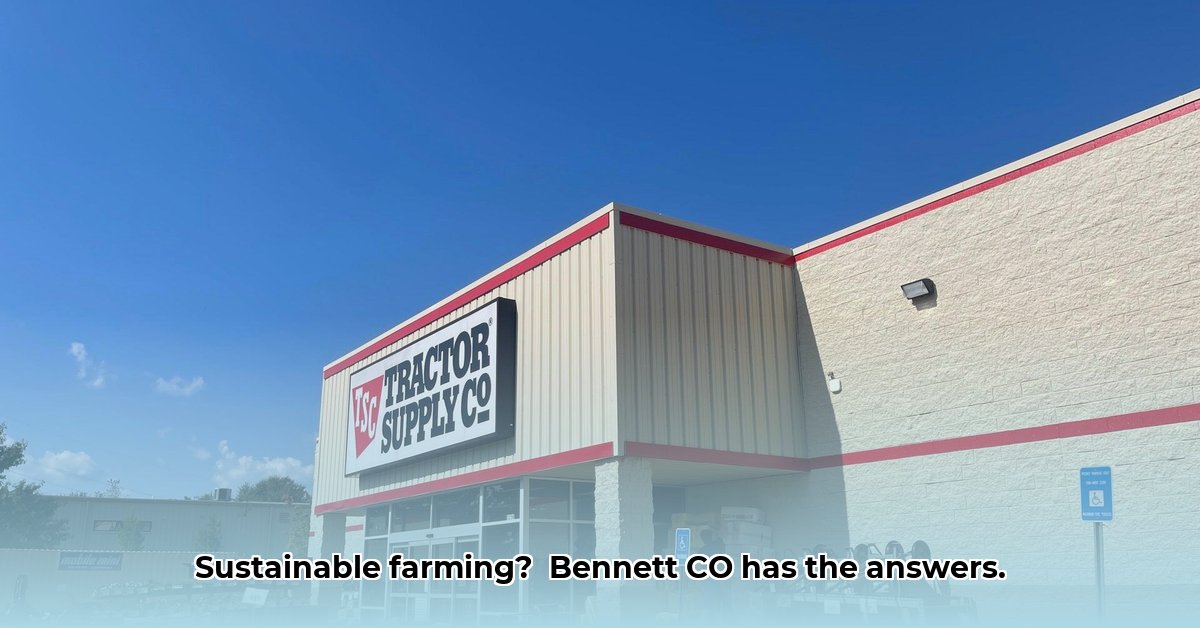
Tractor Supply Bennett CO: A Critical Examination of its Role in Sustainable Agriculture
Tractor Supply Company (TSC) in Bennett, Colorado, occupies a prominent position in the local agricultural landscape. This report investigates the extent to which TSC's operations contribute to sustainable farming practices within the community. We examine its product offerings, assess the needs of local farmers, and propose actionable steps to enhance the role of TSC in promoting environmentally responsible agriculture. The analysis draws on available public information and acknowledges limitations in comprehensive data access. For similar analyses in other areas, see this example report.
Key Findings:
- TSC's current product range includes some items applicable to sustainable farming, but a comprehensive inventory analysis is needed to determine the breadth and depth of its eco-friendly offerings.
- Direct engagement with Bennett farmers is crucial to understand their specific needs and challenges regarding sustainable agricultural practices.
- A collaborative approach involving TSC, local farmers, the Colorado Department of Agriculture, and environmental NGOs is essential to foster a more sustainable agricultural ecosystem.
What's on the Shelves? Assessing TSC’s Sustainable Product Offerings
Determining the extent of TSC's commitment to sustainable agriculture requires a detailed inventory analysis. While the store undoubtedly stocks many products used by farmers, the availability and prominence of specifically sustainable alternatives need further examination. Are organic seeds and fertilizers readily available? What about water-efficient irrigation systems or tools suitable for no-till farming (a soil-conserving cultivation method)? The absence of readily available, detailed inventory data hinders a thorough assessment of TSC's contribution to sustainable practices. Furthermore, pricing comparisons between conventional and eco-friendly products are crucial to understanding market accessibility for local farmers.
How readily available are eco-friendly options? Are they competitively priced? These questions remain unanswered without further investigation. A detailed product review, including a direct comparison of conventional and eco-friendly alternatives, is necessary for a comprehensive analysis.
Understanding Farmer Needs: Unmet Demands and Opportunities
To gauge TSC's effectiveness in supporting sustainable agriculture, understanding the needs and challenges faced by Bennett farmers is vital. Surveys, focus groups, and direct interviews would provide invaluable insights into their current farming practices, access to resources, and unmet demands. Are high costs for environmentally friendly seeds a significant barrier? Is there a lack of information on sustainable farming techniques? Is access to specialized equipment a limiting factor? Addressing these questions is crucial to determine whether TSC is effectively meeting the needs of farmers seeking to adopt more sustainable practices.
Charting a Course Towards Sustainable Agriculture: Actionable Recommendations
Real progress towards sustainable agriculture in Bennett requires collaborative action among multiple stakeholders. The following framework outlines short-term and long-term goals for each key player:
Actionable Steps:
- Conduct Farmer Needs Assessment: TSC should conduct detailed surveys and interviews with local farmers to understand their specific needs and preferences related to sustainable farming.
- Expand Sustainable Product Offerings: Based on the needs assessment, TSC should increase its inventory of certified organic seeds, water-efficient irrigation systems, and other supplies vital for environmentally responsible farming.
- Enhance Product Transparency: TSC should increase the transparency of its supply chain, clearly labeling products with information about their origin and production methods.
- Collaborate with Local Organizations: TSC needs to partner with the Colorado Department of Agriculture and environmental NGOs to provide educational resources and workshops on sustainable farming techniques.
- Incentivize Sustainable Practices: The Colorado Department of Agriculture and other relevant agencies should implement policies and incentives to encourage the adoption of sustainable farming practices.
- Promote Sustainable Farming: Environmental NGOs should actively promote sustainable farming practices and facilitate access to relevant resources.
- Invest in Research & Development: The Colorado Department of Agriculture should invest in research to develop sustainable agricultural practices optimized for Colorado's unique climate and conditions.
Navigating the Risks: Potential Challenges and Mitigation Strategies
Challenges to realizing sustainable agriculture in the Bennett region include limited availability of sustainable products, low farmer awareness of sustainable practices, and potential supply chain disruptions. Effective mitigation strategies involve increased collaboration, educational campaigns, and supply chain diversification.
Risk Assessment & Mitigation:
| Risk Factor | Mitigation Strategy |
|---|---|
| Limited Availability of Sustainable Products | Expand product offerings, partner with eco-friendly suppliers, and actively market sustainable options. |
| Farmer Awareness of Sustainable Options | Conduct educational workshops and in-store demonstrations, collaborate with agricultural extension services. |
| Supply Chain Disruptions | Diversify sourcing, build strong supplier relationships, enhance inventory management to ensure continuous supply. |
| Lack of Government Support | Advocate for policies and funding that incentivize sustainable agricultural practices. |
Regulatory Compliance and Responsible Practices
Adherence to Colorado's environmental regulations is critical for both TSC and local farmers. Sustainable practices must align with existing laws concerning water use, pest control, and other environmental protections. Future research should examine the alignment of TSC's supply chain and product choices with these regulations to ensure not only compliance but, more importantly, a commitment to environmentally responsible operations.
Conclusion:
TSC’s role in promoting sustainable agriculture in Bennett, Colorado, presently remains unclear. Further investigation into its product offerings, coupled with direct engagement with local farmers, is critical to fully assess its contributions and identify opportunities for improvement. Through a collaborative approach and a sustained commitment to transparency, TSC can play a significantly more impactful role in fostering a greener future for Colorado's agricultural landscape.